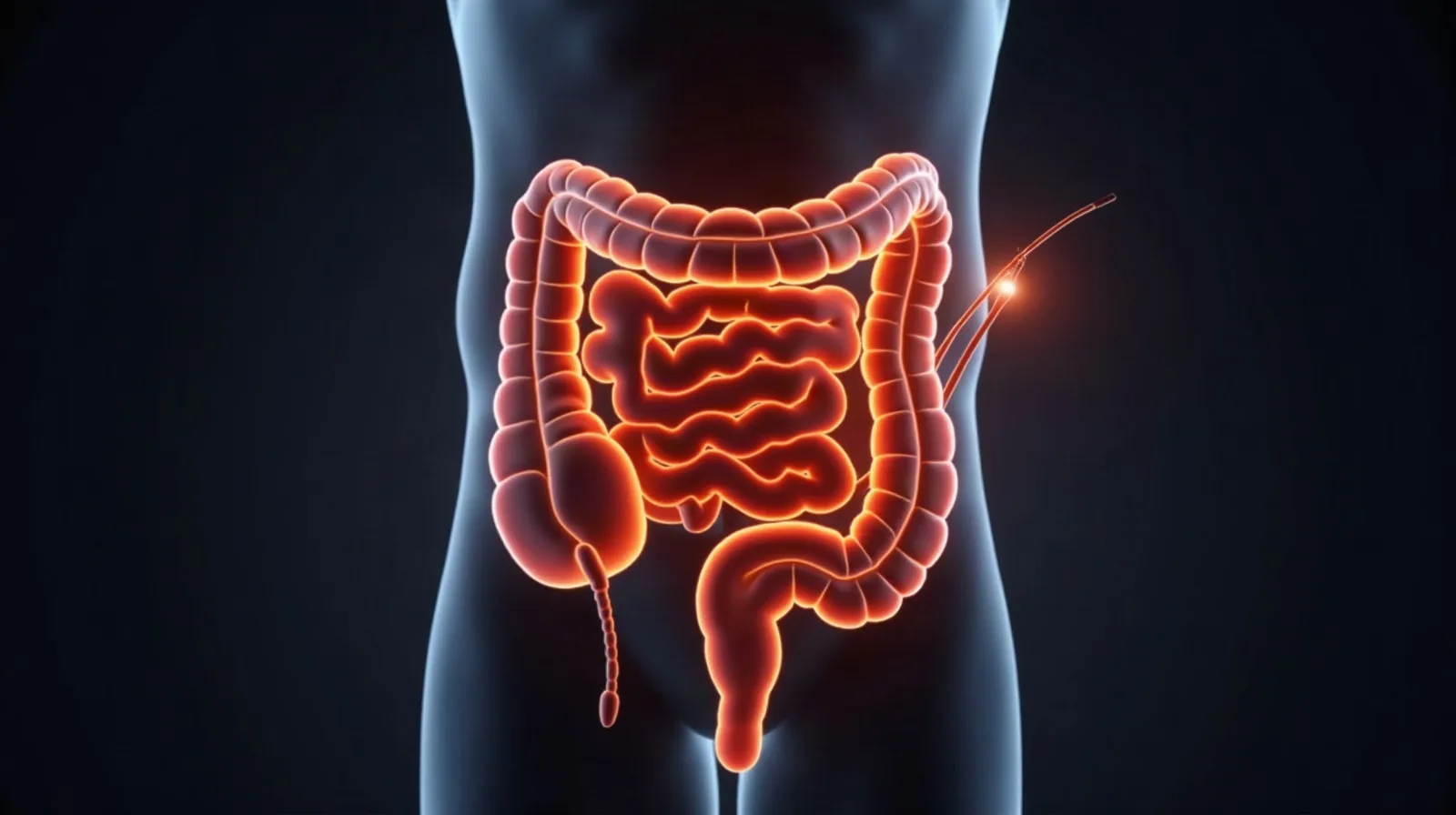
This is the case of a 70 year old lady with multiple colon polyps. The majority of them were large 0-Ip polyps located in the left colon. In total we removed 15 polyps.
Pedunculated polyps
Pedunculated polyps, Paris type 0-Ip, have a stalk connecting them to the bowel wall. This anatomy makes them suitable for snare removal, since the cut is made through the stalk rather than the wall itself.
The issue with large pedunculated polyps
The stalk carries a feeding vessel. The larger the polyp, the thicker that vessel and the higher the risk of post polypectomy bleeding. For large pedunculated polyps, prophylactic measures are applied at the base before resection, such as a detachable loop or clips.
Multiple polyps in one session
Removing many polyps during the same colonoscopy requires planning: recording the site and size of each, selecting the technique by morphology, and submitting specimens separately so histology can be matched correctly. Under ESGE guidance, surveillance at 3 years applies with 5 or more adenomas, size of 10 mm or above, or high grade dysplasia.
After the procedure
The material obtained is sent for histology, and it is that report rather than the endoscopic appearance that determines the next step. Recovery is short compared with surgery: eating and normal daily activities are generally resumed within a few days. Patients are given instructions on avoiding strenuous effort and on medications affecting coagulation, in particular anticoagulants and antiplatelet agents. Decisions about further treatment are usually taken by a multidisciplinary team, taking histology, staging and general condition into account.
Frequently asked questions
Sources
- European Society of Gastrointestinal Endoscopy, Post-polypectomy colonoscopy surveillance: ESGE Guideline Update 2020. https://doi.org/10.1055/a-1185-3109
Content last updated: September 2026 (22/09/2026).