“Heartburn” in the esophagus and gastroesophageal reflux are among the most common complaints in everyday life. Many people will feel a burning sensation behind the breastbone, “sour burps,” regurgitation or a feeling of heaviness after eating, and will put it down to stress, diet or a “sensitive stomach.” What matters is being able to tell when this is an ordinary symptom that can be managed conservatively and when it is a sign that a more targeted diagnostic workup is needed.
The key point is that reflux is not just a “nuisance.” In a proportion of patients, chronic exposure of the esophagus to acid can lead to structural changes in its lining (mucosa). This is exactly where Barrett’s esophagus comes into the picture – a condition in which the lining of the lower esophagus changes so that it becomes more “resistant” to acid, but which is at the same time linked to a potentially increased risk of developing a malignancy (adenocarcinoma). The good news is that, with a proper evaluation, we can detect these changes early and act before problems develop.
What is gastroesophageal reflux and what are its main symptoms?
According to the internationally accepted definition (the Montreal Consensus), gastroesophageal reflux is characterized by symptoms and/or structural changes in the esophagus that are caused by the backflow of stomach contents and affect quality of life. The most common symptoms are a burning sensation (heartburn) and regurgitation (“sour burps”), but atypical complaints are not uncommon, such as chronic cough, hoarseness, throat clearing or a feeling of a “lump” in the throat.
One important point here: the intensity of the symptoms does not always match the severity of the damage. In other words, someone can have severe symptoms without visible damage to the lining (so-called non-erosive reflux disease (NERD)), and the reverse is also possible.
Why does reflux happen? Which factors make it worse?
The cause of reflux is multifactorial. The most important mechanism is spontaneous relaxation of the lower esophageal sphincter. Factors that often contribute include hiatal hernia, esophageal motility disorders, obesity, increased intra-abdominal pressure and impaired gastric emptying. In practical terms, for the patient this means that the condition can be influenced by body weight, the timing and type of meals, alcohol and smoking, as well as lying down right after a meal.
When is reflux “not just reflux”?
The key lies in the so-called alarm symptoms, meaning symptoms we do not want to overlook. If they are present, the recommendation is a medical evaluation and, in most cases, a gastroscopy.
For example, we are particularly concerned about dysphagia (difficulty swallowing), pain when swallowing, unexplained weight loss, anemia, bleeding (black stools or vomiting blood), persistent vomiting and new or severe symptoms that start at an older age. Also, if symptoms persist for a long time or do not respond to treatment as expected, it is right not to rely only on “trial and error” but to go ahead with testing.
Particular attention is paid to patients with risk factors for Barrett’s, such as:
- Men over 50
- Long-standing reflux (>5 years)
- Central (abdominal) obesity
- Smoking
- Family history of esophageal adenocarcinoma
What is Barrett’s esophagus and why does it matter?
Barrett’s esophagus is a metaplastic change of the lower esophagus that occurs in about 10% of patients with chronic reflux.
Its importance lies in its link to an increased risk of developing adenocarcinoma. However, the annual risk of malignancy in non-dysplastic Barrett’s remains low (about 0.1–0.3% per year).
The diagnosis is not based on symptoms or on blood tests. It is made only by gastroscopy and confirmed with targeted biopsies.
Depending on the findings, a surveillance program is set, which may vary with the length of the Barrett’s segment and whether or not dysplasia is present.
How does gastroscopy help and what exactly do we check?
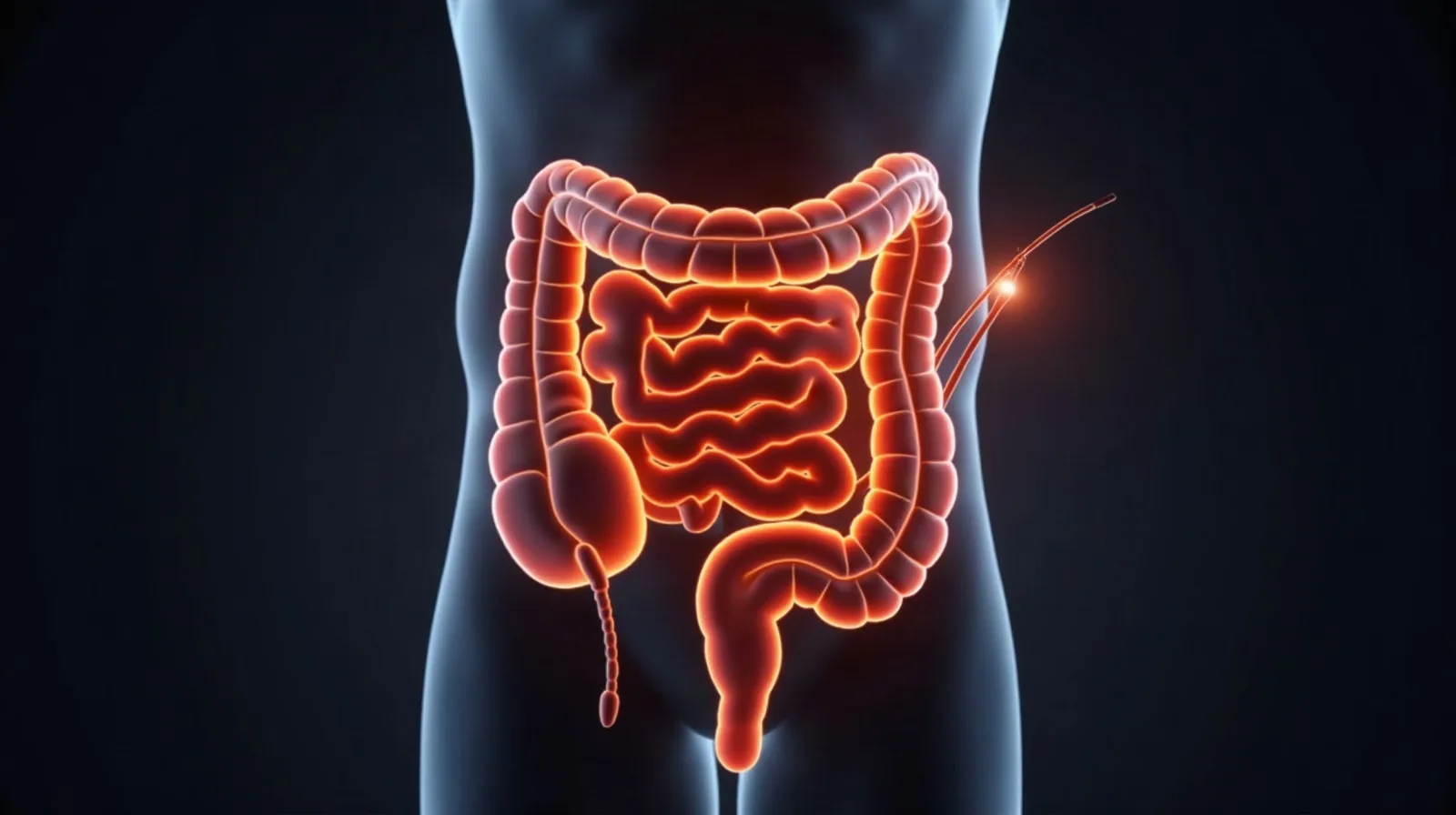
Gastroscopy is a diagnostic endoscopic examination that shows the upper digestive tract, from the esophagus to the duodenum. It is a minimally invasive procedure that is usually done under light sedation, so that the patient is relaxed and the examination is painless and detailed. During the examination, the mucosa (lining) is checked thoroughly and, where needed, biopsies are taken.
In reflux, gastroscopy can reveal esophagitis and complications such as narrowing (stricture), ulcer or bleeding. It is also particularly valuable for Barrett’s esophagus, because the diagnosis can only be made endoscopically, with biopsies. To detect neoplastic changes in patients with Barrett’s, special chromoendoscopy and magnification endoscopy techniques can be used, which provide valuable information. If the gastroscopy is normal but symptoms persist, functional testing with 24-hour pH monitoring or esophageal manometry may be needed to objectively confirm reflux and guide treatment correctly.
What can we realistically expect from reflux treatment?
Proton pump inhibitors (PPIs) are the main drug treatment. In cases of erosive esophagitis, healing is achieved in 80–95% of patients within 6–8 weeks.
To prevent relapses in the long term, maintenance treatment at a lower dose may be needed. At the same time, lifestyle changes (weight loss, avoiding heavy meals before lying down, quitting smoking) play an essential role.
In selected patients with documented reflux and specific indications, laparoscopic fundoplication can be an effective treatment option.
What happens next if Barrett’s or suspicious changes are found?
Here, the approach depends on the findings and the results of the biopsies. In cases of neoplastic changes or early lesions, endoscopy is not only diagnostic but can also be therapeutic. In selected cases, techniques such as endoscopic mucosal resection can be used to remove localized lesions, with the aim of intervening early, before a condition progresses to a more serious stage. The bottom line is that a proper endoscopic evaluation is preventive, not merely reassuring.
Frequently asked questions about heartburn
When does it make sense to get checked?
If your symptoms are frequent or persistent, or if they worry you, the safest course is an evaluation by a gastroenterologist. Especially when there is dysphagia, hiatal hernia, long-standing reflux or an inadequate response to treatment, gastroscopy can provide answers and, most importantly, prevent complications.
Dr. Thomaidis, MD, PhD – gastroenterologist and interventional endoscopist specializing in gastrointestinal oncology & liver diseases – offers a comprehensive evaluation of gastroesophageal reflux and Barrett’s esophagus, with the aim of early diagnosis and personalized treatment.
Book an appointment for a diagnostic evaluation.
Sources
- NHS, Heartburn and acid reflux. https://www.nhs.uk/conditions/heartburn-and-acid-reflux/
- Harvard Health Publishing, GERD diet: Foods to avoid to reduce acid reflux. https://www.health.harvard.edu/diseases-and-conditions/gerd-diet-foods-to-avoid-to-reduce-acid-reflux
- NHS South West London, Self Care Information for Patients: Heartburn and Indigestion. https://swlimo.southwestlondon.icb.nhs.uk/wp-content/uploads/2022/12/Self-Care-Information-for-Patients-Heartburn-and-Indigestion-V1.1.pdf
Send us your request
Fill in your details and we will contact you to schedule your appointment.
Content last updated: October 2026 (12/10/2026).